
The Central Argument
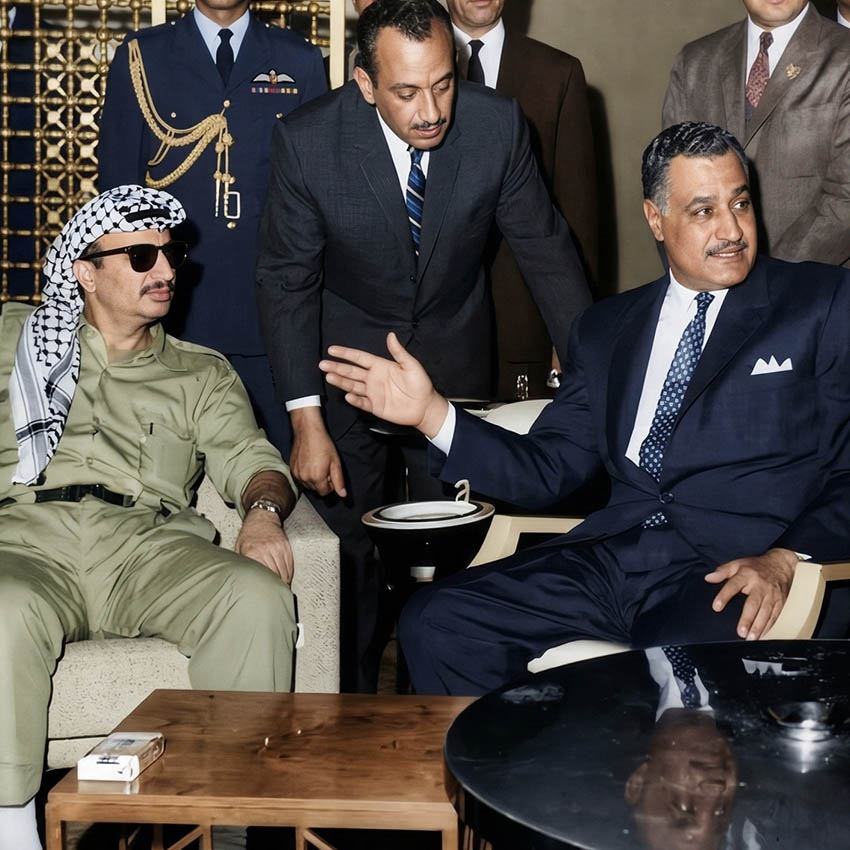
The term “Arab–Israeli conflict” has become entrenched in political and academic discourse as a comprehensive description of the confrontation between the State of Israel and the states in its surrounding region. This article argues that it is a conceptual construct that emerged during the era of pan-Arabism in the second half of the twentieth century, and that its analytical validity has eroded with the disintegration of the pan-Arab idea, rendering the term no longer relevant to present reality. The article examines whether there is, in fact, an “Arab nation” or “Arab people” in the ethno-national sense of a community possessing a shared consciousness of sovereignty beyond the Arabic language, or whether the very definition and construction of Arab nationhood were intended, for political and military considerations, to serve the roots of the conflict between Arab states and Israel—primarily the Israeli–Palestinian conflict—and to portray it as a conflict between the Arab nation and Israel, rather than as a more limited and localized dispute.
Point of Departure
For decades, the term “Arab–Israeli conflict” has served as a central interpretive framework for analyzing relations between Israel and the states of the region. Its widespread use, both in academic discourse and in media and political arenas, has created the impression that it constitutes a neutral, factual description of an enduring reality. However, a careful historical and conceptual examination reveals that it is not a neutral category, but rather a term that was formed within a specific ideological context, reflecting a particular cognitive and political phase in the development of the Middle East, whose analytical validity is now steadily eroding.
The starting position of this article is that every conceptual framework is laden with underlying assumptions. The term “Arab–Israeli conflict” carries with it a significant assumption: that an entity referred to as “the Arabs” constitutes a unified political subject that can be described as one side of the conflict. This assumption was not self-evident, and it originated in specific historical circumstances that must be examined.
The article is structured around three central questions: First, what are the criteria for the existence of a nation in its modern ethno-national sense, and in particular, what distinguishes a cultural community from a sovereign people? Second, did a unified Arab sovereign entity emerge in the twentieth century that meets these criteria? Third, does the framework of the “Arab–Israeli conflict” still provide an accurate description of contemporary state reality, or has it become obsolete?
The central claim of the article is that the ideology of Arab unity, which reached its peak during the Nasser era, functioned as a highly influential cognitive framework that also shaped perceptions of the conflict with Israel. However, this cognitive framework did not mature into a unified sovereign people possessing governing institutions, a constitution, and shared enforcement mechanisms. Accordingly, the term “Arab–Israeli conflict” reflected a particular ideological period more than it did a sustainable institutional structure. As pan-Arab ideology has eroded, so too has the analytical power of the conceptual framework built upon it.
Research Framework
In order to examine whether an “Arab nation” existed in the modern sense, it is first necessary to establish a theoretical framework. The literature on modern nationalism draws a fundamental distinction between two types of communities: a cultural-linguistic community, on the one hand, and a sovereign political nation, on the other.
A cultural-linguistic community is a group that shares a language, traditions, collective historical memories, and a cultural identity. Benedict Anderson referred to it as an “imagined community”—an entity whose members will never know one another personally, yet nevertheless experience a shared sense of belonging. Ernest Gellner emphasized that industrialization and cultural standardization created the need for nationalism as a mechanism that aligns identity with the requirements of the modern state. Anthony Smith suggested that the core of the nation lies in the “ethnos”—a connection to a community of origin from which modern nationalism develops.
However, there is consensus among scholars on one point: a shared language and culture are not sufficient to produce a nation in the political sense. For that, sovereignty is required: namely, a claim to self-rule, governing institutions, and the capacity to exercise legitimate force over a defined territory.
Four cumulative components can be identified that define a sovereign nation in the modern sense: First, a unified political territory, or at least a clear claim to sovereignty over it. Second, shared governing institutions—a government, parliament, and judicial system—operating across the entire territory of the nation. Third, a collective consciousness of sovereignty, meaning recognition by members of the community that they are bearers of shared sovereignty, committed to a single political body. Fourth, a unifying legal-constitutional framework that defines the rules of the political game and binds all citizens.
A shared language may constitute an important and even cohesive component, but it is not sufficient in itself. Switzerland presents three linguistic communities united as a single people; Belgium has demonstrated that two linguistic communities can coexist within one state framework, even under conditions of tension; by contrast, all Spanish speakers worldwide do not constitute a single nation. Sovereignty, therefore, is the necessary test.

Pan-Arabism versus National Identities
To understand the rise of pan-Arabism, one must return to the historical circumstances in which modern Arab states were formed. The collapse of the Ottoman Empire following World War I left a vast political vacuum in the Arab region. The Versailles arrangements, the Sykes–Picot Agreement, and the British and French mandates reshaped the map, creating new states whose borders were drawn by colonial powers, not always with regard to ethnic, tribal, or religious realities.
Processes of state-building began separately in each territory: Iraq, Syria, Jordan, Lebanon, Egypt—each developed its own governing mechanisms, bureaucratic institutions, and national armies. At the same time, however, alongside these state-building processes, a foundation for a unifying regional identity emerged: a shared Arabic language, a common cultural and religious heritage, and a collective memory of a golden Arab age—all served as raw materials for a national ideology.
The establishment of the Arab League in 1945 marked an institutional attempt to translate this shared Arab identity into coordinated political action. The League created a forum for intergovernmental discussion, a mechanism for formulating common positions, and a foundation for economic and cultural cooperation. In practice, however, it remained an intergovernmental framework in which each member retained full sovereignty.
The League’s central institutional failure lay in enforcement: it lacked the ability to impose decisions on member states, did not develop binding mechanisms for dispute resolution among them, and did not evolve into a supranational body with independent sovereignty. This failure was not incidental—it reflected the internal ambivalence of the project: Arab states sought cooperation, but not the relinquishment of sovereignty.
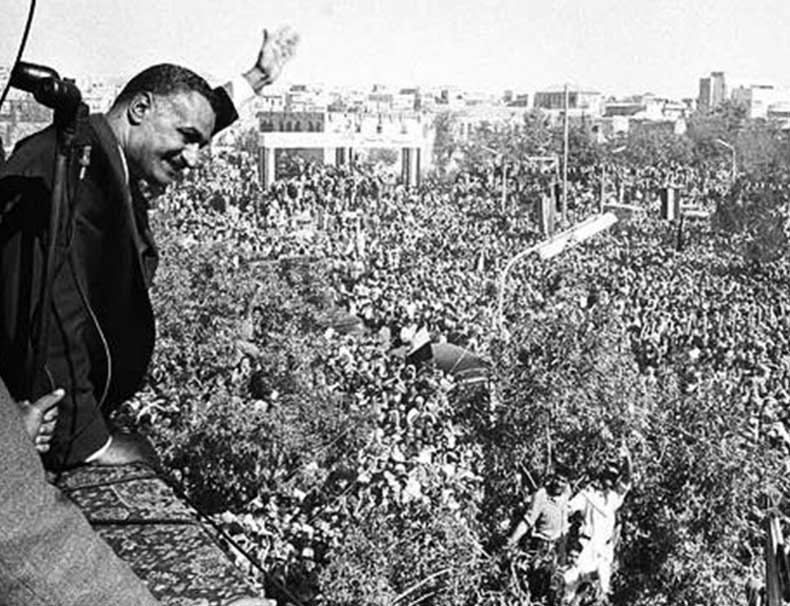
Under the leadership of Gamal Abdel Nasser, President of Egypt from 1954, the ideology of Arab unity reached its peak. Nasser became the symbol of pan-Arabism—a movement that sought to transform shared Arab identity into a foundation for genuine political unification. Nasserist rhetoric spoke of the “Arab nation” as a single political entity, threatened by Western imperialism and Israel, and therefore compelled to act in unity.
The most dramatic moment in the attempt to translate this idea into reality was the establishment of the United Arab Republic in 1958—a union between Egypt and Syria. However, the experiment ended in failure in 1961, when a Syrian coup led to Syria’s withdrawal. This failure was highly significant: it underscored that even when there is a declared political will, differences in interests, political traditions, and separate bureaucratic structures make the construction of shared sovereignty extremely difficult.
The Formation of the “Arab–Israeli Conflict” Framework
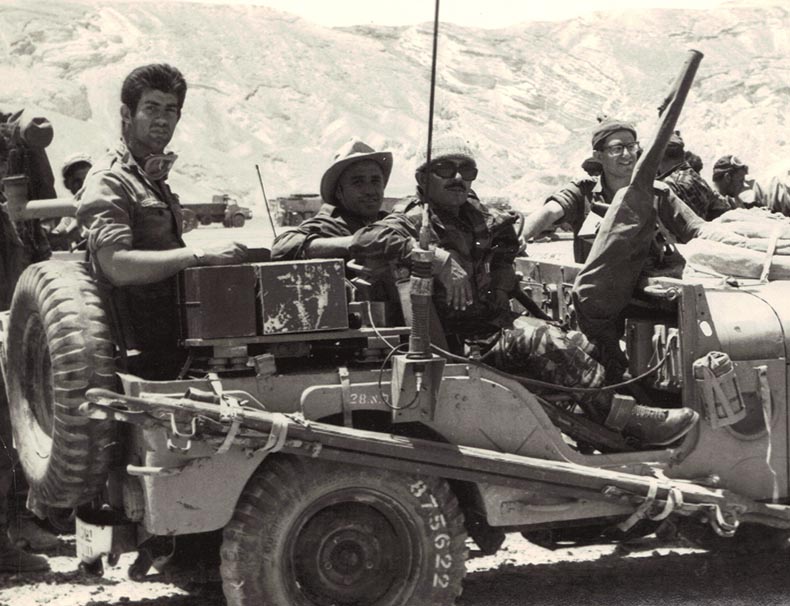
The wars of 1948, 1967, and 1973 were framed in Arab, Israeli, and Western public discourse alike as a comprehensive regional struggle. The term “Arab–Israeli conflict” served different purposes: for the Arab side, it expressed solidarity and unity in the face of a common threat; for Israel, it at times evoked concern and at other times allowed it to present itself as David versus Goliath; for external powers, it provided a simple analytical framework for managing foreign policy.
In practice, however, the fighting itself was conducted by separate sovereign states. Egypt, Syria, Jordan, Iraq—each deployed its forces according to its own national considerations, military capabilities, and state interests. There was no unified supreme command; no coherent regional strategy; no joint command institutions. The dramatic military collapse in 1967, in which Israel managed to defeat three armies within a matter of days, stemmed in part from a fundamental failure of coordination among the Arab armies.
The term “Arab” in this context functioned more as a cognitive and ideological framework than as a description of a unified sovereign subject. It provided legitimacy for military and political action by linking it to a broader narrative of defending Arab honor, liberating Palestine, and resisting “Zionist aggression.” Yet beneath this rhetorical layer operated distinct and sometimes even conflicting state interests.
When the criteria outlined above are applied to the Arab community, a clear picture emerges: there was and remains no single sovereign territory; the Arab world is divided into separate sovereign states with recognized international borders. Nor have there been, or are there, shared governing institutions. The Arab League, as noted, did not develop supranational sovereignty: its decisions are not legally binding under international law. In terms of a unifying legal framework, there is no Arab constitution, no supreme Arab court with binding authority, and no regional enforcement system. As for the locus of political loyalty, even at the height of pan-Arabism, the actual political loyalty of the Arab citizen was to the government of their own state, not to any “Arab government,” which did not exist.
What does exist is a rich and significant cultural and linguistic identity. The Arabic language, in its standardized forms, creates a deep connection among communities from Morocco to Iraq. Islam, even though not all Arabs are Muslim, constitutes an important component of identity. A shared cultural, literary, and intellectual heritage—of poetry, prose, and philosophy—generates a genuine sense of belonging.
What also exists is a political ideology—pan-Arabism—that translated this cultural identity into a political project, sought to mobilize it for the purposes of struggle, and created solidarity that was also expressed in political action. But ideology is not sovereignty. This distinction lies at the core of the article’s analytical argument.
Comparison to Post-Imperial Spaces
Following the collapse of the Spanish Empire in the early nineteenth century, separate sovereign states emerged in South America. All share the Spanish language, a Catholic tradition, and a common colonial background. The unification aspirations of Simón Bolívar, who sought to establish “Gran Colombia,” one of the most ambitious regional integration projects, collapsed in the face of state interests. Today, although regional bodies exist, genuine supranational sovereignty has not materialized. A Latin American cultural identity persists, but it has no sovereign counterpart.
The French-speaking African states also share a language, a colonial heritage, and even certain common institutions. However, they remain separate sovereign states, and attempts at regional integration have not succeeded in creating binding regional sovereignty.
The British Commonwealth (Commonwealth of Nations) provides an interesting example of a post-imperial identity without sovereignty. Seventy-six states share a royal symbol, a legal tradition (Common Law), and the English language. However, the Commonwealth is not a sovereign entity, and the monarch holds no binding authority over its members.
In all these cases, a similar pattern emerges: a broad cultural community, aspirations for unity, but sovereignty that remains at the state level. Arab unity is not unique, and as such it is not a moral failure; it reflects a general dynamic in which state-building prevails over federal ambitions.
Erosion of the Regional Framework
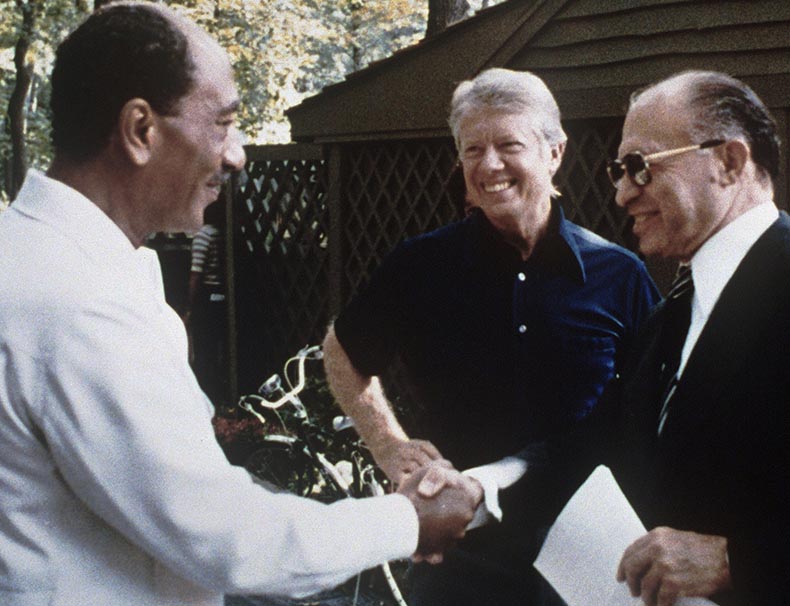
The signing of the peace agreement between Egypt and Israel in 1979, led by Anwar Sadat and Menachem Begin, fundamentally altered the structure of the “Arab–Israeli conflict.” Egypt—the largest Arab state and the one with the most powerful military in the wars against Israel—chose state pragmatism over Arab ideological solidarity. This decision likely cost Sadat his life (there are theories that he was assassinated primarily due to his opposition to the implementation of Sharia law, while others believe the main motive was his leadership of the peace agreement with Israel), but it established a clear precedent: Egyptian national interest prevailed over commitment to the pan-Arab project.
Egypt’s formal expulsion from the Arab League following the agreement illustrated the extent to which it was perceived as a violation of the norm of Arab solidarity. However, within a few years Egypt was readmitted, as reality led other Arab states to recognize that their interests did not require isolating Egypt.
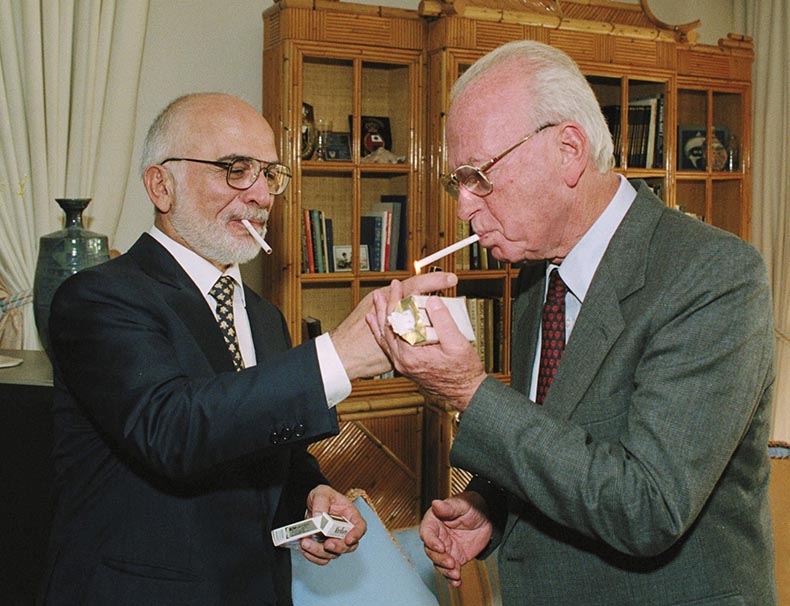
The peace agreement between Jordan and Israel in 1994 added another dimension. Jordan, which borders Israel and participated in the wars of 1948 and 1967, also chose normalization. The “Arab framework” of the conflict continued to erode.
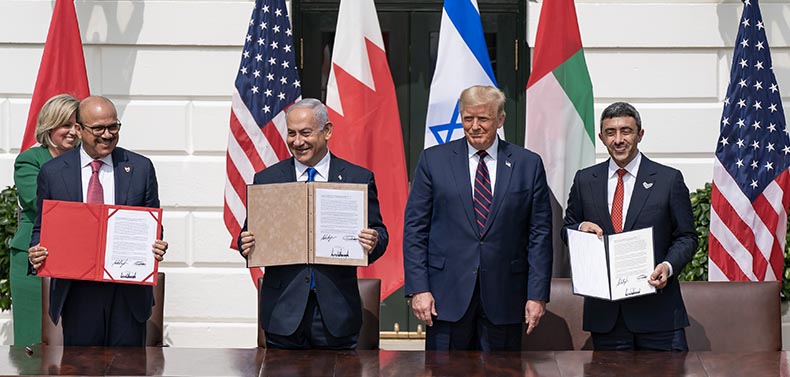
The normalization processes in the frame of the Abraham Accords (2020), through which the United Arab Emirates, Bahrain, Morocco, and Sudan normalized relations with Israel, marked a new stage. These were states that had not been direct parties to the wars, yet their commitment to the Arab solidarity project had previously prevented them from publicly recognizing Israel.
The Abraham Accords revealed that strategic interests, including in part the growing Iranian threat, outweigh commitment to the narrative of the “Arab–Israeli conflict.” State pragmatism prevailed over regional ideology.
Thus, the framework of the “Arab–Israeli conflict” has not disappeared entirely; it still exists as rhetoric, as a narrative, and as a symbolic framework. However, as a descriptor of shared sovereignty acting against Israel, its power has greatly diminished. The conflict with the Palestinians, which is specific and national rather than broadly “Arab,” remains, but it differs fundamentally from the “Arab–Israeli conflict” that characterized previous decades.
The Israeli–Palestinian Conflict
The Israeli–Palestinian conflict is a specific, defined national conflict with distinct characteristics that do not naturally merge with the broader “Arab–Israeli conflict.” At its core lies a dispute over a defined territory, national rights, and the political identity of a particular national community. These characteristics, as will be shown below, are what drove Palestinian leadership over decades to frame the conflict within broader narratives—Arab, Islamic, and anti-colonial—rather than leaving it as it is: a localized national dispute.
Understanding the Palestinian strategy requires understanding the balance of power: a political entity without a state, without an independent army, and without economic power, confronting a state with a military, an economy, and recognized international institutions. Within this asymmetrical structure, Palestinian interest, from its strategic perspective, necessitates increasing its perceived mass of power.
A central tool for achieving this goal has been presenting the conflict not as a localized national dispute, but as part of a broader struggle: initially as an “Arab–Israeli conflict,” and later, particularly with the rise of Islamist movements, also as a “religious conflict” between Islam and Judaism. Each such expansion of the framework served a clear strategic purpose: mobilizing additional actors—states, peoples, and movements—to the Palestinian side, and generating cumulative international pressure on Israel.
Since its establishment in 1964, and especially following Yasser Arafat’s rise to leadership in the late 1960s, the PLO adopted a consistent strategy of branding the conflict as a comprehensive Arab–Israeli conflict. Arafat repeatedly visited Arab capitals, delivered speeches before the “Arab nation,” and emphasized his role not only as a representative of the Palestinians, but as the bearer of the “sword of the Arab nation” against the “Zionist-imperialist outpost.”
This strategy yielded certain results: in 1974, the Arab League recognized the PLO as the “sole legitimate representative of the Palestinian people”; in the same year, Arafat addressed the UN General Assembly as a representative of a national liberation movement. However, these achievements relied on the pan-Arab framework—on the assumption that there exists a cohesive “Arab world” committed to solidarity with the Palestinians.
The states neighboring Israel—Egypt, Jordan, Syria, and Lebanon—cooperated, each for its own reasons, with the framework of the “Arab–Israeli conflict.” For them, the broader framework served internal purposes: it provided a unifying narrative for diverse populations under a single leadership, diverted attention from domestic shortcomings, and legitimized massive defense budgets. Wars with Israel served, among other things, internal political needs, even when their military prospects were not promising.
At the core of Arab military participation stood state interests, not a commitment to shared Arab sovereignty. Jordan fought in 1948, in part to expand its control over the West Bank; Egypt in 1948 sought a presence in the Negev; Syria aimed to extend its influence in Lebanon and northern Israel—what they considered Palestine. Arab solidarity also functioned as a tool in the regional power games of sovereign states protecting their interests.
With the rise of Islamist movements, and particularly Hamas from 1987 onward, an additional dimension was added to the expansion of the framework: presenting the conflict as a religious “jihad,” as a global struggle of Islam against Judaism and the West. This framework enabled the mobilization of audiences beyond the Arabic-speaking Arab world, such as Muslims in Indonesia, Pakistan, and Morocco, in support of a conflict that would otherwise have remained primarily the domain of the Palestinians.
The expansion of the religious framework served a similar strategic interest: increasing the mass of international pressure on Israel by transforming the conflict into an issue that mobilizes audiences far beyond the actual geographical scope of the conflict.
Here we arrive at the most important analytical point for the present: the erosion of pan-Arabism and the wave of normalization between Arab states and Israel are severing the link between the Israeli–Palestinian conflict and the broader “Arab–Israeli conflict.” The dismantling of this linkage carries profound strategic implications for Palestinian leadership.
As long as the narrative of the “Arab–Israeli conflict” prevailed, the Palestinians could present themselves as the “vanguard” of a comprehensive Arab struggle and demand steadfast support from Arab states as a national obligation. Arab peace agreements and normalization with Israel empty this narrative of its substance. In effect, they convey the message: our conflict with Israel, if it ever existed, has ended; the Israeli–Palestinian conflict is solely the concern of the Palestinians.
Once the Arab world withdraws from the conflict, the Palestinians are left with the reality that has always existed: a localized national dispute between themselves and Israel. Such a conflict, even if morally and politically charged, can be addressed through negotiation mechanisms between two parties and is likely to be conducted as a relationship between two national entities rather than as a struggle of a “nation” against a “state.”
Here a profound paradox in Palestinian strategy becomes evident: the success in mobilizing the Arab world to define the conflict as “Arab–Israeli” relied on the strength of pan-Arabism. However, precisely because Arab unity was not sovereign or institutional but merely ideological, once the ideology weakens, so too does the commitment. Arab states, which acted out of state interests even when operating under the banner of pan-Arabism, continue to act out of state interests when distancing themselves from it.
Another paradox lies in the attempt to expand the framework into a religious dimension: mobilizing Islamic identity increased the commitment of millions of Muslims worldwide to the conflict, but at the cost of radicalizing the struggle itself and narrowing the space for negotiation. A movement that defines the conflict as a “jihad” later finds it difficult to reach a political compromise without being perceived as betraying its religious principles.
In light of all the above, a clear picture emerges. At its core, the Israeli–Palestinian conflict is a localized national conflict between two communities over a defined territory—Eretz Israel, which they refer to as Palestine. The expansions into an “Arab–Israeli” and a “Muslim–Jewish” conflict were not factual descriptions of reality, but mobilization strategies built upon regional and religious ideologies, intended to shift the balance of power in favor of the Palestinian side.
As these ideologies weaken, and as the detachment of the conflict from the broader Arab framework runs counter to Palestinian interests, the conflict is increasingly exposed in its localized essence. This analysis does not negate the moral and human weight of the Israeli–Palestinian conflict, nor does it determine the manner of its resolution, but it allows it to be seen with clarity: not as an all-encompassing eschatological struggle tied to the end of days, nor as an inseparable component of the “Arab–Israeli conflict,” but as a specific national dispute that, like other national conflicts, is open to political analysis and negotiated resolution.
The Bottom Line
This article has sought to examine how the term “Arab–Israeli conflict” was formed, what set of underlying assumptions it carried, and why its analytical validity has eroded. The analysis has shown that pan-Arabism functioned as a significant and highly influential political ideology that consolidated a cultural identity and translated it into a political project. At the same time, however, this process did not yield supranational sovereignty. No sovereign Arab nation existed in the modern institutional sense; there was no single sovereign territory, no binding governing institutions, no constitution, and no singular locus of political loyalty.
Accordingly, the term “Arab–Israeli conflict” reflected a particular historical and ideological phase—the peak of pan-Arabism—more than it did a sustained sovereign structure. With the erosion of this ideology, and with peace agreements and normalization processes that have placed state interests above regional solidarity, the analytical power of the term has also weakened.
The bottom line is not a denial of the existence of a genuine, rich, and meaningful Arab cultural identity. The conclusion is the necessity of distinguishing between a political idea and its institutional realization. This distinction enables a more precise reading of both the history and the future of the Middle East arena—a reading that frees analysis from ideologies rooted in a bygone era, and above all, an understanding that the conflict with the Palestinians is not an Arab–Israeli conflict, as the Palestinians seek to portray it, but a localized one.