
On Saturday, February 28, 2026, the United States and Israel launched a deadly attack against Iran, demonstrating impressive military-operational coordination between them. This attack surprised not only in its intensity and determination, but also in the coalitions it produced: Islamic states such as Kuwait, which like Iran had financed Islamist terrorism, stood alongside the United States, while European states, which had also been targeted by terrorism, opposed the attack.
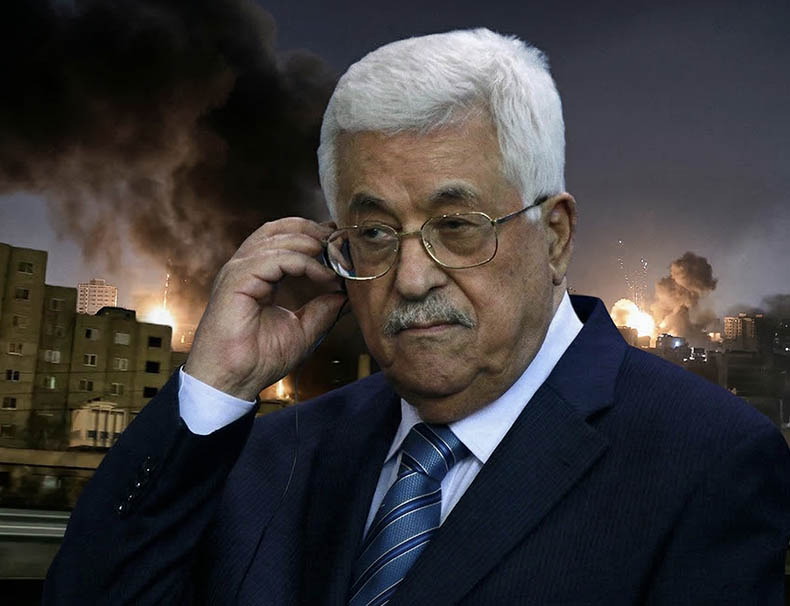
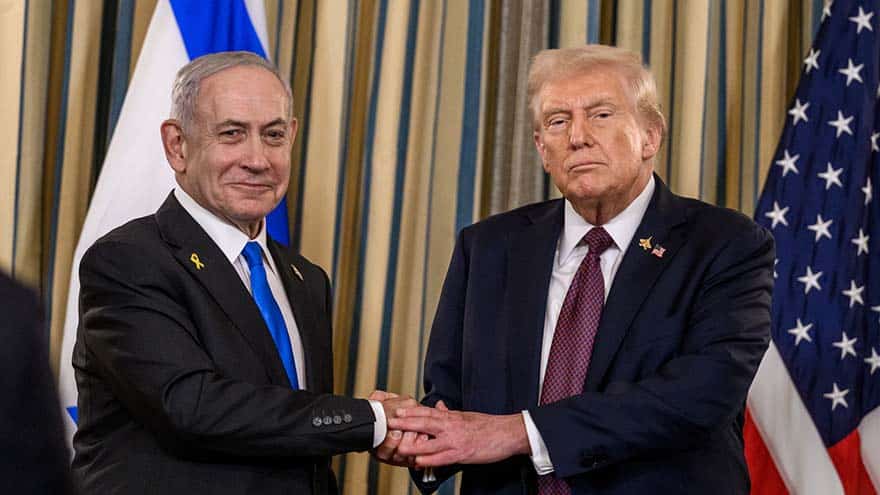
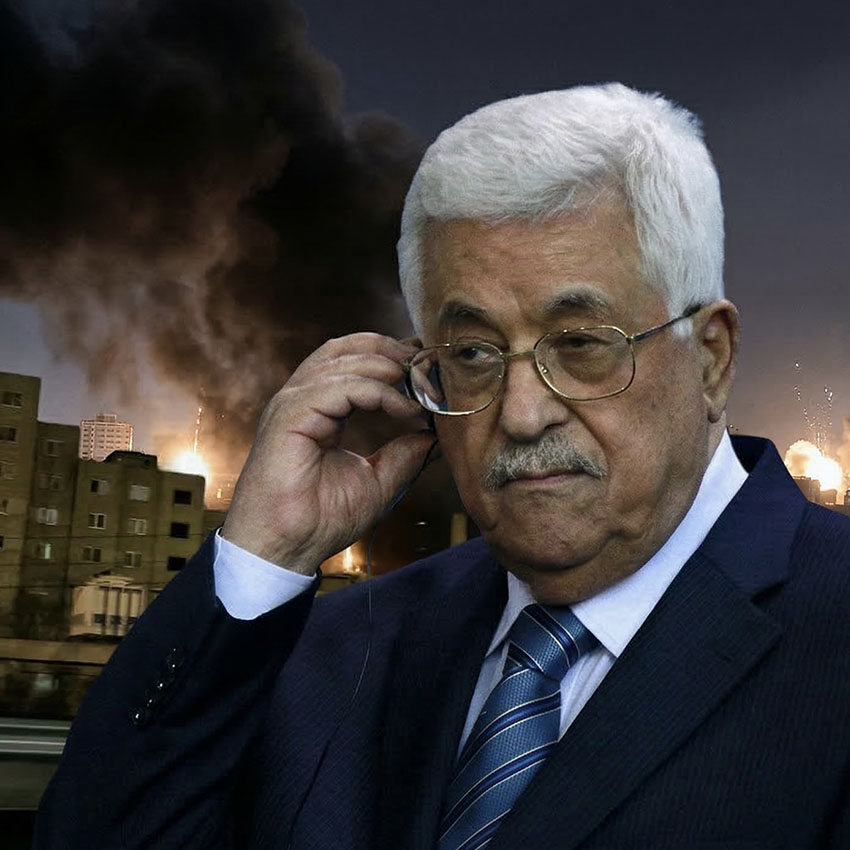
Yet particularly notable was the silence on the part of the Palestinian Authority. Since the campaign against Iran began, the Palestinian Authority has diligently refrained from expressing a clear and unequivocal position regarding it. In fact, it is quite evident that it is deliberately adopting a stance that avoids expressing explicit and direct support for either side. The Authority chooses to safeguard its interests vis-à-vis the United States and is therefore compelled to adopt a cautious and responsible policy toward the American administration, and especially toward President Trump, who is known for his uncompromising response to his opponents. This approach obliges the Palestinian Authority to take American interests into account and to adopt a position that cannot be interpreted as criticism or as siding with a hostile actor against which the United States is currently waging war.
At the very least, it can be said that the Authority refrains from presenting a concrete position formulated in clear and unequivocal terms. In practice, it adopts an evasive and ambiguous approach, deliberately avoiding clear alignment with either side. In contrast, and it must be acknowledged that this is quite predictable, the radical Islamic actors, foremost among them Hamas and the Palestinian Islamic Jihad, which are militarily and financially supported by Iran, stand clearly and unequivocally alongside the current regime in Tehran.
At the same time, following Iranian attacks using missiles and UAVs against Arab states, the Palestinian Authority strongly condemned Iran. The President of the Palestinian Authority, Mahmoud Abbas, even pointed an accusing finger at the ayatollah regime in Tehran for harming Arab states and called for the reunification of the Islamic world. For decades, such a call has characterized the way in which the Arab-Islamic collective has rallied in circumstances of confrontation with Israel, as part of an effort to place it in a position of isolation within the regional system.
Hussein al-Sheikh, Secretary-General of the PLO Executive Committee and the Minister for Civil Affairs in the Palestinian cabinet, went a step further in his response to the war. On February 28, 2026, he appealed to the Arab League with a request to convene an urgent meeting of Arab foreign ministers to discuss the Iranian attacks against “sister” Arab states. On the practical level, it was reported that in conversations he held with the foreign ministers of Qatar, Saudi Arabia, Jordan, the United Arab Emirates, Bahrain, and Kuwait, al-Sheikh emphasized Palestine’s position opposing the humiliating Iranian attacks against Arab states, and pointed to full Palestinian solidarity with them and its support for any decision that would be adopted. In addition, he stressed that the Iranian attacks constitute a blatant violation of the United Nations Charter and of the principles of international law, and pointed to the position of the Palestinian leadership opposing any harm to the sovereignty of Arab states or any attack against them by any party.
At the level of the Palestinian street, a shift in attitudes toward the war became evident as Iranian military strikes intensified, employing missiles and UAVs against targets in Arab states. Initially, the stance among the Palestinian public was characterized by alignment with Iran and clear identification with it, owing to its status as a supporter of the Palestinian cause and as one that stands alongside the Palestinians in their confrontation with Israel. However, as Iranian attacks against targets in Arab states increased, particularly in states that clearly support the Palestinians, such as Kuwait, concern and apprehension intensified. As a result, there was a clear decline in public support and identification among Palestinians with Iran.
Fear of the Marginalization of the Palestinian Issue
In articles and commentaries published in the Palestinian media beginning one week after the outbreak of the attack, a particularly prominent approach emerges: alongside criticism directed at the Israeli-American “aggression” against Iran, there is also a call to criticize and condemn the “unjustified” Iranian attacks against Arab states. This is despite the fact that these states expressed opposition to their territories and airspace being used as launching points for military strikes against Iran.
Following the end of the campaign against Hamas in Gaza, there is concern among Palestinians that the war against Iran will divert international attention away from the need to advance along the political track toward resolving the Palestinian issue. Such a scenario could manifest itself in practice through a lack of interest in promoting the peace process and, in effect, the continuation of stagnation in diplomatic efforts. The practical implication of pushing the Palestinian issue aside as a matter requiring progress toward a political solution is that the Palestinian national aspiration to establish a state would become a distant vision, increasingly solidifying as a dream that cannot be realized. This comes at a time when discussion of the Palestinian issue is focused on “routine” initiatives related to humanitarian aid in the Gaza Strip and on provocative activities by settlers against Palestinians in the Judea and Samaria area.
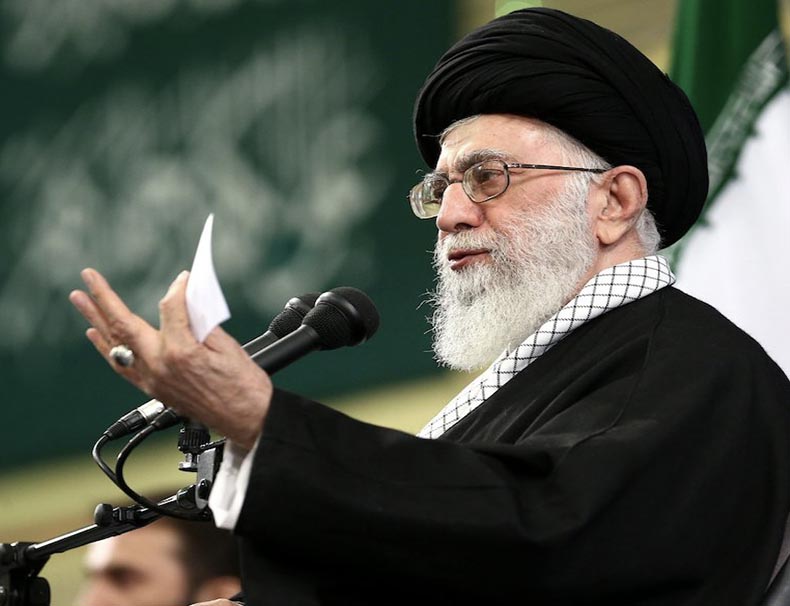
As noted, in contrast to the Authority, the radical Islamic organizations in the Palestinian arena, particularly Hamas and the Palestinian Islamic Jihad, have expressed unequivocal support for the ayatollah regime since the beginning of the campaign against Iran, in light of what they describe as the American-Israeli attack against it, which they claim was intended to advance the vision of “Greater Israel.” These organizations sharply criticized and condemned the targeted killing of Iran’s Supreme Leader, Ali Khamenei, while praising him for standing alongside the Palestinian “resistance.” Statements by senior Hamas officials called on the Arab and Islamic nation to unite and demonstrate solidarity with Iran in order to prevent the continuation of the war and the realization of its objectives, which they claim are intended to reshape the region in accordance with Israel’s aspiration to establish “Greater Israel” at the expense of Arab and Islamic lands and the interests of the peoples of the region.
Hamas’s military wing, the “Izz al-Din al-Qassam Brigades,” predictably and openly stood alongside Iran in light of the American-Israeli attack against it, as a result of what it described as Iran’s “support for Palestine and the resistance.” It supported Iran’s retaliatory actions and expressed confidence in its armed forces and in its Revolutionary Guards, as well as in their ability to inflict heavy losses on the attackers. In a response issued by Hamas’s military wing, it was emphasized that “Israel failed to break Gaza’s will for two years and will therefore also fail against Iran.” The peoples of the region were called upon to stand alongside Iran and to act against American and Zionist policy. The statement concluded by declaring that the war constitutes a “jihad of victory or martyrdom.”
The Islamic Jihad organization, for its part, condemned the American-Israeli attack against Iran and described it as a “dangerous escalation intended to reshape the region in Israel’s favor, harm the Palestinian cause, and impose hegemony.” It pointed to Iran’s right to self-defense and called on the peoples of the region and on Palestinians to unite against the war. The organization later issued a mourning statement over the deaths of Iran’s Supreme Leader and other senior figures in the leadership of the Islamic Republic, in what it described as a “treacherous attack” that could be defined as a “war crime.”
The military wing of the Islamic Jihad organization, the “Jerusalem Brigades,” issued its own mourning statement regarding the assassination of Khamenei, whom it described as an “exceptional leader on the road to Jerusalem,” as well as the other senior figures of the ayatollah regime. Referring directly to Khamenei, it was noted that his life was filled with faith, awareness, and revolutionary zeal, and that he breathed his last as a martyr in the “most difficult battle of the nation.” In addition, it was emphasized that Khamenei demonstrated an “unwavering stance toward Palestine,” and that he “supported the resistance, provided weapons, and was present in every battle and round of fighting.” At the same time, it stated in principle that the targeted killing of leaders is a futile act and that Iran is strong and resilient, while the resistance movements continue the struggle “to humiliate the attackers.”
Senior officials in Hamas and in the Islamic Jihad organization noted that under the current circumstances it is not necessary for the Gaza Strip to act beyond expressing support and solidarity, and that Iran is capable of defending itself and delivering severe blows to Israel if the confrontation continues. Sources in the Palestinian factions claimed that Iran appreciates their positions and does not expect active involvement from them, especially after two years of a difficult war in the Gaza Strip.
In a sober assessment, they emphasized that the “resistance” organizations in the Gaza Strip “have nothing to offer” beyond political and moral support, particularly in light of the harsh reality that characterizes the current situation in the Strip. Against this background, they ruled out the possibility of organized rocket fire from the Strip toward Israel, due to a shortage of means and of medium- and long-range rockets, and also out of concern that such a move would provide Israel with a pretext for carrying out targeted strikes against activists and commanders within the organization. At the same time, the Arab press reported (Asharq Al-Awsat, February 28, 2026) increased deployment of Hamas security apparatuses and forces of the “Izz al-Din al-Qassam Brigades” in various areas of the Strip, as well as the descent of prominent operatives into hiding and the strengthening of security measures out of fear of targeted assassinations by Israel.
The “Popular Front for the Liberation of Palestine” also openly and quite sharply aligned itself against the United States and Israel. It declared full support for Iran, its leadership, its people, and its army, and strongly condemned the “treacherous American-Zionist attack.” In its statement, it emphasized that the war against Iran constitutes a broad move led by the United States and Israel as part of a “colonial policy aimed at controlling the region’s resources, particularly oil, and reshaping the political map in favor of American-Zionist interests, while attempting to break the axis of resistance.” The Popular Front further argued that the attack constitutes a violation of the United Nations Charter and international law, and emphasized that Iran has the right to respond by all means.
The Israeli Interest
In sum, the position of the Palestinian system regarding the war against Iran is clearly characterized by duality and lack of uniformity. On the one hand, the Palestinian Authority demonstrates a cautious and calculated stance, deliberately refraining from adopting a clear and unequivocal position of aligning with either side in the confrontation. On the other hand, the radical Islamic organizations, particularly Hamas and the Palestinian Islamic Jihad, stand clearly and unequivocally alongside their Iranian patron, which has supported them for many years with generous military and financial assistance.
The longer the attack continues, and particularly if Iran does not cease carrying out strikes against targets in Arab states, the more the public position currently expressed against Iran may, over time, translate into more practical actions. This could take the form of joining the campaign at some level through the execution of military actions against Iranian targets.
From Israel’s point of view, there is no doubt that there is a clear interest in the continuation of the campaign. This should continue until the full achievement of its declared objectives, not merely part of them, while making an effort to create the necessary conditions to bring about the collapse of the ayatollah regime and to prepare the ground for the emergence of moderate and pragmatic actors in the national leadership, subject to the will of the Iranian people.
In assessing the possible directions of development of the campaign against Iran, Israel must draw lessons from past experience and take into account the possibility that the American administration, led by President Trump, may also make decisions and adopt steps that do not necessarily correspond with Israeli interests. Such steps could reflect a change or shift in current American policy. Such a scenario could materialize particularly if, during the continuation of the fighting, additional American soldiers are killed beyond the six fatalities reported at the time of writing, a development that could increase pressure on Trump from the public, the political system, and the media to bring the attack to an end.