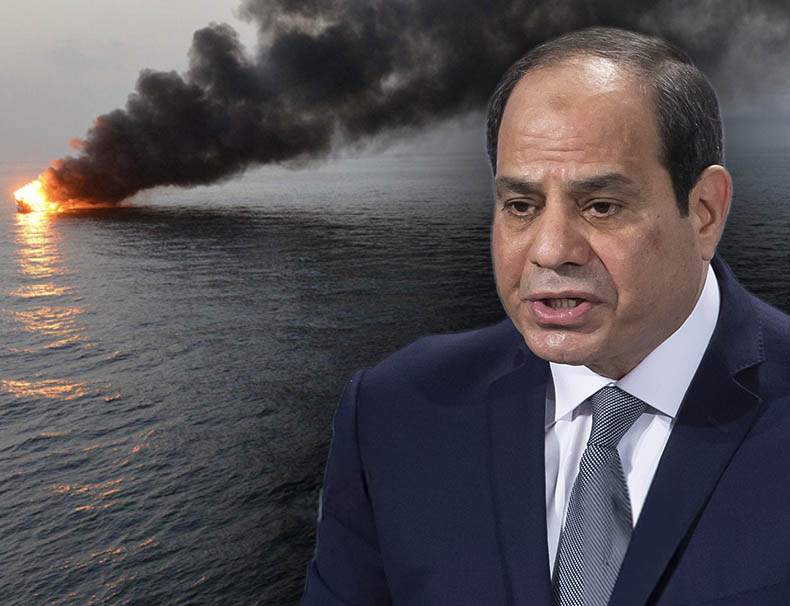

In an official statement issued by the Egyptian presidency, it was reported that during a phone call held on March 13, 2026, President Abdel Fattah el-Sisi spoke with his counterpart, Iranian President Masoud Pezeshkian, at the latter’s initiative. El-Sisi strongly condemned the Iranian attacks on the “sister” states of the Gulf, Jordan, and Iraq, and called for their immediate cessation, while allowing an opportunity to advance toward a political-diplomatic solution that would bring an end to the war.
He emphasized that the Arab states that were attacked do not support the war against Iran and do not take part in it in practice; rather, they have participated in efforts to curb escalation and have supported negotiations aimed at resolving the crisis. It was further reported that during the call, el-Sisi discussed with his Iranian counterpart possible ways to end the war, emphasizing Egypt’s readiness to mediate between the parties in an effort to reach political and diplomatic solutions. He also stressed the need to respect international law and the UN Charter, as well as the importance of respecting state sovereignty and refraining from interference in internal affairs.
For his part, the Iranian president expressed, according to those same reports, his appreciation for Egypt’s efforts to bring the war to an end. He noted that his country had participated in previous rounds of negotiations to reach an agreement on the nuclear program and pointed out that Iran had maintained relations of fraternity and good neighborliness with Arab states. Media reports indicated that as part of its mediation efforts, Egypt attempted to open a communication channel between Iran and the United States, which did not yield any progress.
It is important to note that the war launched by the United States and Israel on February 28, 2026, took place in the midst of a process of rapprochement between Egypt and Iran, whose development could be observed over recent years. This followed the ups and downs that have characterized relations between the two countries since the Islamic Revolution in Iran nearly half a century ago, in 1979, with the removal of Mohammad Reza Shah Pahlavi from power.
It is worth noting that this article is fundamentally based on the professional experience I have accumulated as someone who was actively involved in the security-political dialogue channel that took place between Israel’s defense establishment and parallel counterparts on the Egyptian side, as well as on ongoing monitoring of the developments and transformations that have characterized Egyptian policy toward Iran over the years.
Iran’s Policy as a Threat to Egypt
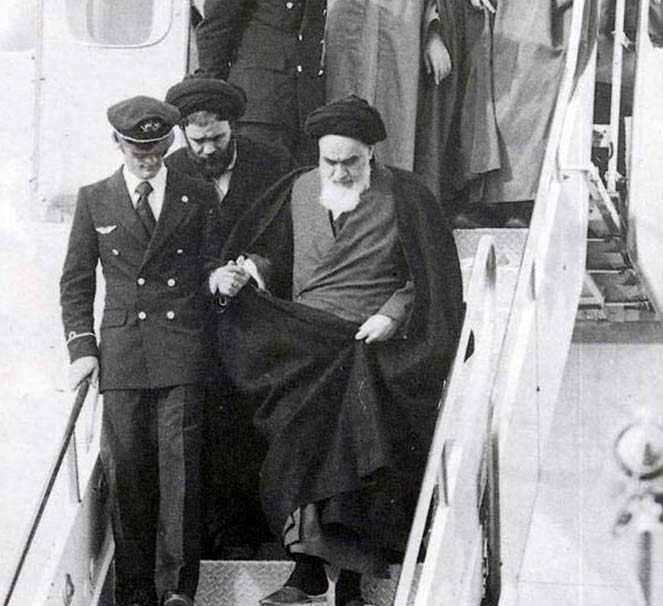
The central event that led to a turning point in Egypt’s relations with Iran was, of course, the Islamic Revolution and the rise of Sayyid Ruhollah Khomeini to power nearly half a century ago. This development led to a rapid deterioration in relations between the two countries, manifested concretely in Egypt’s unilateral decision to sever diplomatic ties with Iran and recall its ambassador to Cairo. From the security-political dialogue conducted with the Egyptian leadership at the time, it was clear that the Nile state viewed Iran’s pursuit of a military nuclear capability, its subversive activity in regional states, and its support for radical Islamist organizations, including those operating in Egypt, as a dangerous challenge to its security and stability and as a severe strategic threat to the moderate Sunni camp in the Middle East.
Against this backdrop, it was easy to discern the concern prevalent within Egypt’s political-security establishment that if the nuclear threat posed by Iran were not curbed, and particularly if the international sanctions imposed on it in 2017 were lifted, Iran could deepen and expand its regional reach to the point of a renewed “Persian Empire.” From the Egyptian perspective, the ayatollah regime in Tehran exploited the American entanglement in Iraq in the early 2000s, during the presidency of former U.S. President George Bush, in order to advance its regional objectives.
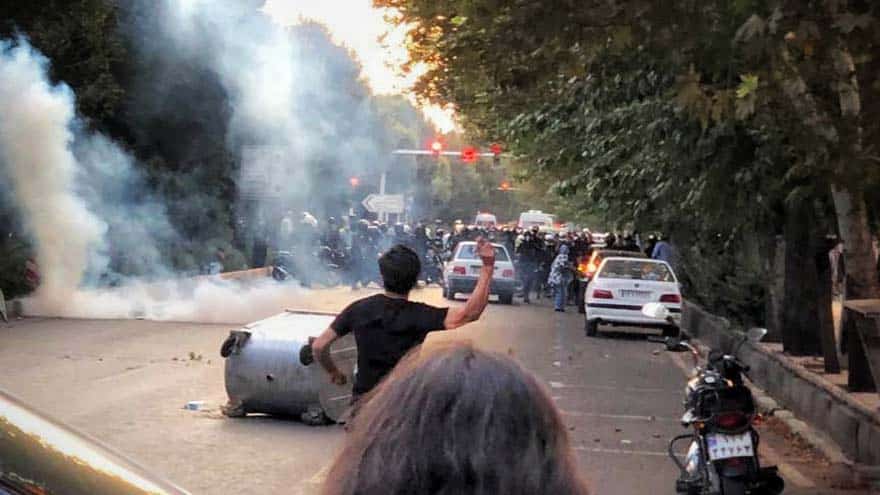
- Development of nuclear capability: An effort to complete within a few years the development of a military nuclear capability, that is, to reach the finish line in producing an atomic bomb.
- Increasing regional influence: Involvement and presence in Iraq, based on a perception that views the land of the two rivers as a “vital space” for advancing Iranian objectives in the region. From the Egyptian perspective, Iran’s activity in Iraq serves as a clear message to the international community and the Arab system that Iran and its regional standing cannot be ignored, and that its interests must be taken into account, particularly regarding security in the Persian Gulf.
- Consolidating its centrality in the regional radical axis: The extreme positions adopted by Iran toward Israel and the United States, along with its support for extremist actors in the regional system— in Syria and in Islamist organizations such as Hezbollah in Lebanon and Hamas and Islamic Jihad in the Palestinian arena—have helped it in its effort to establish its status as the state leading the radical camp in the Middle East.
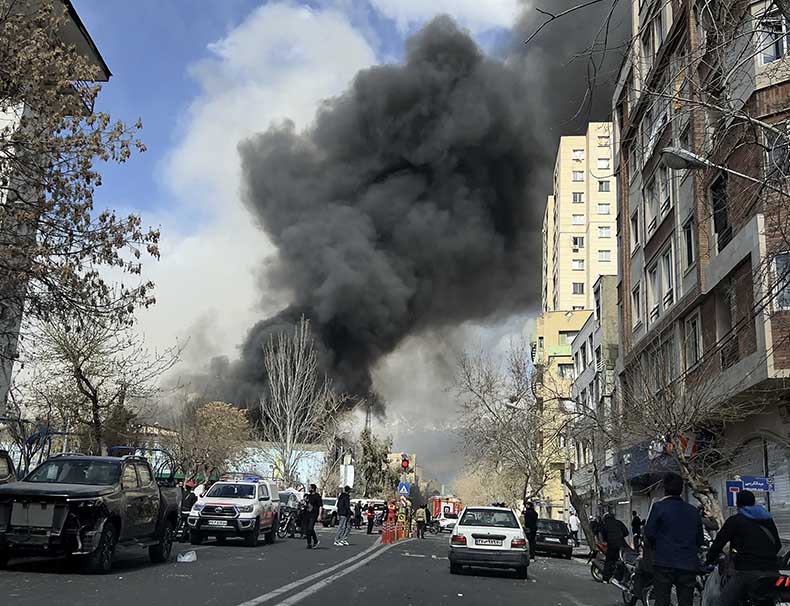
A Decade and a Half of Renewed Rapprochement
Following the rise to power in Egypt of a senior Muslim Brotherhood figure, Mohamed Morsi, in June 2012, a certain improvement was evident in relations between Egypt and Iran. This was clearly reflected in the fact that, for the first time in decades, Iranian warships passed through the Suez Canal, and Iran appointed a serving ambassador in Cairo after a diplomatic rupture that had lasted about 30 years. A dramatic milestone in the rapprochement between the two countries was recorded during President Morsi’s historic visit to Tehran in September 2012, as a guest at the 16th summit of the Non-Aligned Movement. During the visit, Morsi met with Iranian President Mahmoud Ahmadinejad, and at its conclusion a joint statement was issued in which the two agreed to define themselves as “strategic partners.”
In practice, from the dialogue held at the time with senior officials in the Egyptian leadership, it was evident that a new spirit was blowing in Egypt regarding relations with Iran, and that from Cairo’s perspective there was no longer any obstacle to renewing them. At the same time, there was no change in Egypt’s negative position regarding Iran’s development of nuclear capabilities. There was also an attempt to downplay the importance of President Morsi’s visit to Tehran, with claims that it was merely a short stop on his way to China, while emphasizing that it did not indicate any substantive change in Egyptian policy.
Following the rise of Abdel Fattah el-Sisi to power, officially after the presidential elections held in May 2014, the diplomatic rupture between Egypt and Iran was renewed. The regime in Cairo continued to view Iran as a negative regional actor and openly displayed a hostile and suspicious attitude toward it. It opposed Iran’s subversive involvement in regional states and regarded it as a bitter rival in the struggle to establish influence and hegemonic status in the Middle East. At the same time, Iran was not perceived as posing a direct threat to Egypt’s national security, but rather as a secondary and distant threat, while radical Islamist organizations were seen as presenting a more immediate and tangible danger. Although Egypt viewed Iran’s pursuit of a military nuclear capability, its regional subversion, and its growing influence in the Arab sphere through a threat-based lens, it nevertheless regarded the Muslim Brotherhood as a more problematic, immediate, and dangerous challenge.
The nuclear agreement signed between Iran and the major powers in 2015 was received by Egypt with a notably moderate response. The official Egyptian reaction expressed hope that the agreement would have positive implications for preventing a nuclear arms race in the region, for the denuclearization of the Middle East, and even for improving Egypt’s relations with Iran. The reference to denuclearizing the Middle East of weapons of mass destruction implicitly contained, as had been suggested in similar statements in the past, a clear hint directed toward Israel, given the capabilities often attributed to it in the nuclear domain.
Egypt Did Not Believe in the Nuclear Agreement with Iran
In the years preceding the signing of the nuclear agreement, it was evident that the Egyptian side believed an effective and strict monitoring system should be established to oversee the implementation of any agreement between the major powers and Iran. Alongside this, concerns were expressed regarding Iran’s continued subversive activities and its negative involvement in the internal affairs of regional states. In this context, it was emphasized that Egypt continued to view Iran as a negative actor promoting and spreading problematic ideas of revolution and extremism in the region. With specific regard to the nuclear agreement, the Egyptian side assessed that if it led to the lifting of sanctions imposed on Iran, it should be assumed that Iran would act swiftly to advance its nuclear weapons development program, using deception and concealment, as had been learned from past experience. In such a scenario, the Egyptian side did not rule out the possibility that Gulf states might submit to Iran rather than stand against it. Egyptian officials also pointed to the negative implications of the agreement in terms of expanding military cooperation between Iran and Hamas and Islamic Jihad, as well as increasing the financial support provided by the regime in Tehran to these movements.
After the signing of the nuclear agreement with Iran, a considerable degree of distrust was evident on the Egyptian side regarding the sincerity of Iran’s intentions. In this context, the possibility was not ruled out that Iran might renege on the commitments it had undertaken under the agreement. It was assessed that an Israeli military strike against Iranian nuclear facilities remained a plausible scenario and would not be removed from the agenda even after the agreement’s signing, particularly if it became clear that Iran was not meeting its obligations and was taking steps that would enable it to rapidly advance toward nuclear capability. It is important to highlight the gap that could be observed between Egypt’s official position regarding the nuclear agreement and its practical stance. At the official level, this position was reflected in a statement issued by the Foreign Ministry in Cairo, deliberately phrased with a high degree of moderation and employing general, non-committal terms, as evidenced by the expression of hope for stability and calm in the region. The statement also expressed hope that the agreement would have positive implications such as preventing a regional arms race, denuclearizing the Middle East, and even possibly improving relations with Iran. Egyptian Foreign Minister Sameh Shoukry, for his part, welcomed the agreement in a conversation with journalists, noting that Egypt’s foreign policy is not bound by any external actor, and added that Egypt’s relations with Iran do not depend on the name of a street in Tehran—a reference to Egypt’s earlier demand to remove the name of Khaled al-Islambouli, the assassin of President Sadat, from a street in Tehran as a condition for restoring relations.
Egypt’s public response to the nuclear agreement with Iran reflected a strong desire to align itself with the Western position, while taking advantage of the situation to reiterate its traditional demand for a denuclearized Middle East—implicitly, though not directly, aimed at Israel. At the same time, it was evident that, at its core, Egypt remained concerned about the threat, repeatedly emphasizing that it posed “serious challenges” and generated “great fears,” particularly in light of the incentive it provided for Iran to renew its negative role in the region.
During 2023, reports and assessments appeared in Arab media regarding a rapprochement in relations between Egypt and Iran. In June 2023, it was reported that the two countries had reached a preliminary agreement to establish a joint committee to discuss the renewal of ties and security coordination between them. On a practical level, the agenda included the full restoration of diplomatic relations, upgrading interest sections to the level of embassies, and holding a summit meeting involving the foreign ministers or presidents of both countries. Responding to these reports, the Egyptian foreign minister at the time, Sameh Shoukry, described them as “speculation,” but added that Egypt was monitoring the normalization processes between Iran and the Gulf states and did not rule out a change in its traditional policy toward the regime in Tehran if and when it concluded that such a shift would be beneficial.
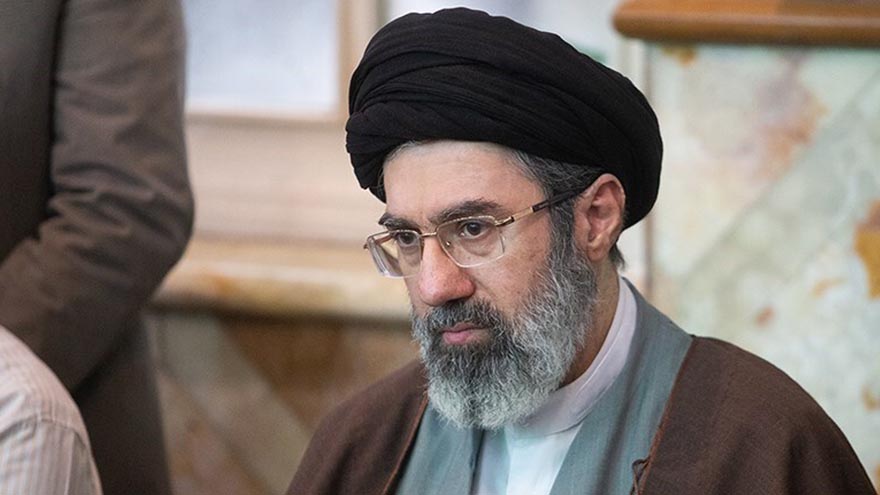
An Attempt to Form a Moderate Islamic Coalition
In practice, the reference to a possible thaw in Egypt–Iran relations came against the backdrop of contacts that took place between the two countries in 2021–22. Within this framework, a series of relevant events occurred—a conversation between President el-Sisi and the Iranian foreign minister on the sidelines of an international conference held in Baghdad in August 2021, a meeting between Egypt’s intelligence chief and Iran’s vice president in November 2022, and contacts between intelligence delegations from both countries. The dialogue between the parties took on a more active and intensive dimension from April 2023 onward, following the renewal of diplomatic relations between Iran and Saudi Arabia in that same month, which Egypt welcomed, and also as a result of a growing general impression that a “regional détente” was taking shape. The contacts held that month between representatives of Iran and Saudi Arabia were in practice mediated by Oman and Iraq, which also hosted representatives of both countries on its territory.
Iran viewed the improvement of ties with Egypt as a move that aligned with its desire to advance relations with the states of the moderate and pragmatic camp in the Arab system, with particular emphasis on its neighbors in the Persian Gulf. This was part of its effort to consolidate its regional status and strengthen its deterrence image vis-à-vis Israel. There is no doubt that, from the perspective of the ayatollah regime, a significant improvement in relations with Egypt, as a central state in the Arab system, was perceived as an achievement of political importance that reinforces recognition of its regional standing. Improving ties with Egypt also served Iran’s material and economic interests, as it enabled it to expand its trade relations in the region, inter alia through the use of the Suez Canal, as well as by increasing the volume of its exports to Egypt.
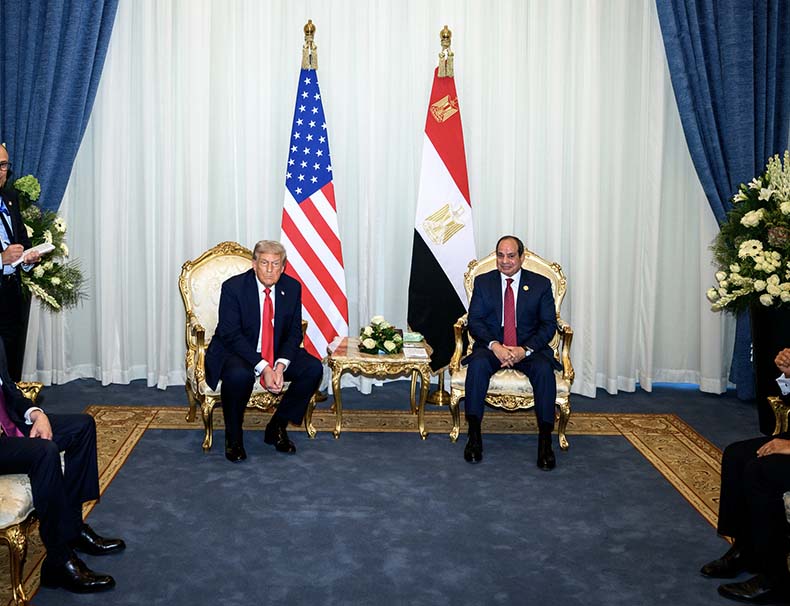
Opposes the Policy, but Not the Regime
Since the outbreak of the war against Iran, Egypt has taken a clear position against it, primarily sharply condemning the Iranian attacks on Arab states—attacks it defined as “a violation of their sovereignty and a direct threat to Arab national security.” At the same time, Egypt appears to be cautious in its criticism of Iran, so as not to allow the discourse with it to deteriorate into direct confrontation. Concretely, Egypt has expressed support for advancing a compromise with Iran and has called on the Arab states affected by its attacks to show restraint and self-restraint. Egypt’s first official response to the war was reflected in a statement issued by the Foreign Ministry on February 28, 2026, expressing “deep concern over the military escalation” and the “expansion of the conflict,” which could “drag the entire region into chaos.” It noted that diplomatic efforts and dialogue are preferable. While Egypt strongly condemned the “Iranian harm to the unity and territorial integrity of Arab states” and called for adherence to the “principle of good neighborliness,” it also hinted that they should refrain from responding and “exercise restraint at this critical stage in regional history.”
President el-Sisi conveyed a similar message to the leaders of the Arab states affected by the Iranian attacks. He condemned the violation of their sovereignty without explicitly mentioning Iran and clarified that dialogue is preferable, as “military solutions will not serve the interests of any of the parties.” El-Sisi also expressed concern that Egypt would be affected by the war and its economic consequences, particularly due to the closure of the Strait of Hormuz and potential harm to navigation in the Suez Canal. Particularly sharp criticism was voiced by the Secretary-General of the Arab League, Ahmed Aboul Gheit. He condemned the Iranian attacks, calling them a “strategic mistake,” but also stated unequivocally that Iran’s suffering should not be underestimated, and that there is no justification for harming Arab states or dragging the region into a large-scale war.
Egyptian opposition to a strike against Iran and to the overthrow of its regime was also reflected in articles and commentary published in the Egyptian press. For example, the daily Al-Ahram warned on February 29, 2026, a day after the outbreak of the war, that the fall of the Iranian regime would destabilize the region and that a compromise arrangement should be reached. Regarding the Iranian attacks on Gulf states, it described them as directed at “American military bases,” without condemning them and while ignoring the civilian targets that were struck. In an editorial in Al-Ahram on March 1, 2026, it was written that “military escalation, or the overthrow of the Iranian regime, will not achieve stability in the region, but will push toward prolonged instability… Egypt consistently supports diplomatic efforts to resolve international problems, the continuation of the negotiation track, and the settlement of outstanding disputes regarding the nuclear file through dialogue between the United States and Iran and through compromises… (it opposes) military solutions and their disastrous consequences that will spare no one and will increase the risk to regional states, as these are conditions for an open war rather than the limited rounds of conflict we have known in the past.”
Another editorial published in Al-Ahram on March 2, 2026, while condemning Iran’s attacks on Arab states and expressing solidarity with them, again emphasized that Egypt opposes war and believes diplomacy must be upheld. The article stated that “immediately upon the outbreak of the war on February 28, 2026, Egypt was among the first countries to call for prioritizing the language of dialogue and political and diplomatic solutions over the use of force for two main reasons: the use of force could have disastrous consequences for the entire Middle East… leading to instability and chaos. In addition, it would undermine the tireless efforts of many international and regional actors, foremost among them Egypt, to strengthen security and stability in the region…”
Regarding Egypt’s role in the context of the war, recent reports in Arab media, marking three weeks since the attack on Iran, indicate that the head of Egypt’s General Intelligence Service, Hassan Rashad, has been in contact with counterparts on the American side in an attempt to bring about a cessation of the war, so far without success. In addition, it has been hinted that, in an effort to advance this goal, Egypt has approached Turkey, Qatar, and Oman to exert pressure on the administration in Washington on this matter. It is important to note that voices have recently been heard in Egyptian media expressing concern over the strengthening of Israel as a result of the war. In this context, it is noted that Major General (res.) Ahmed Wasfi, former commander of Egypt’s Second Army in northern Sinai, argued that one of the strategic objectives of the campaign is control over maritime routes and straits—Bab el-Mandeb and Hormuz—and that ultimately the Middle East may undergo a process of redistribution into spheres of influence. He added that, from his perspective, there is now a need to establish a regional alliance among Egypt, Turkey, Saudi Arabia, and Pakistan in order to address these developments.
From conversations recently held by the author of this article with informed Egyptian sources, and from the overall information published in the media, it is clearly evident that there is a sense of concern in Cairo regarding the possible entry of Gulf states into the circle of war against Iran. From the Egyptian perspective, such a development could prolong the campaign and drag the region into extreme scenarios of a broader-scale confrontation, and even into a war of attrition in which radical Islamist actors could take part—including Hezbollah in Lebanon, Hamas and Islamic Jihad in the Gaza Strip, the Houthis in Yemen, and pro-Iranian Shiite militias in Iraq. In any case, from the author’s perspective, the fall of the ayatollah regime in Tehran is not a scenario whose likelihood should be measured in the short term.
The war being waged in recent weeks against Iran reflects—and even further intensifies—the way in which the regime in Tehran is perceived by Israel as a threatening, dangerous, and problematic actor. Under these circumstances, Egypt’s position, as reflected in a clear trend toward improving its relations with Iran in recent years, as well as in its current efforts to bring about an end to the war, does not align with Israel’s perceptions. From the Israeli perspective, the ongoing campaign must ultimately yield a process of regime change in Iran. In place of the current regime, a new, responsible, and pragmatic leadership should emerge—based on the will of the people and through as democratic a process as possible—that will act in the service of the interests of the Iranian people. The expectation in Israel is that such a scenario, if and when it materializes, will also usher in a new era in Iran’s relations with Israel.